
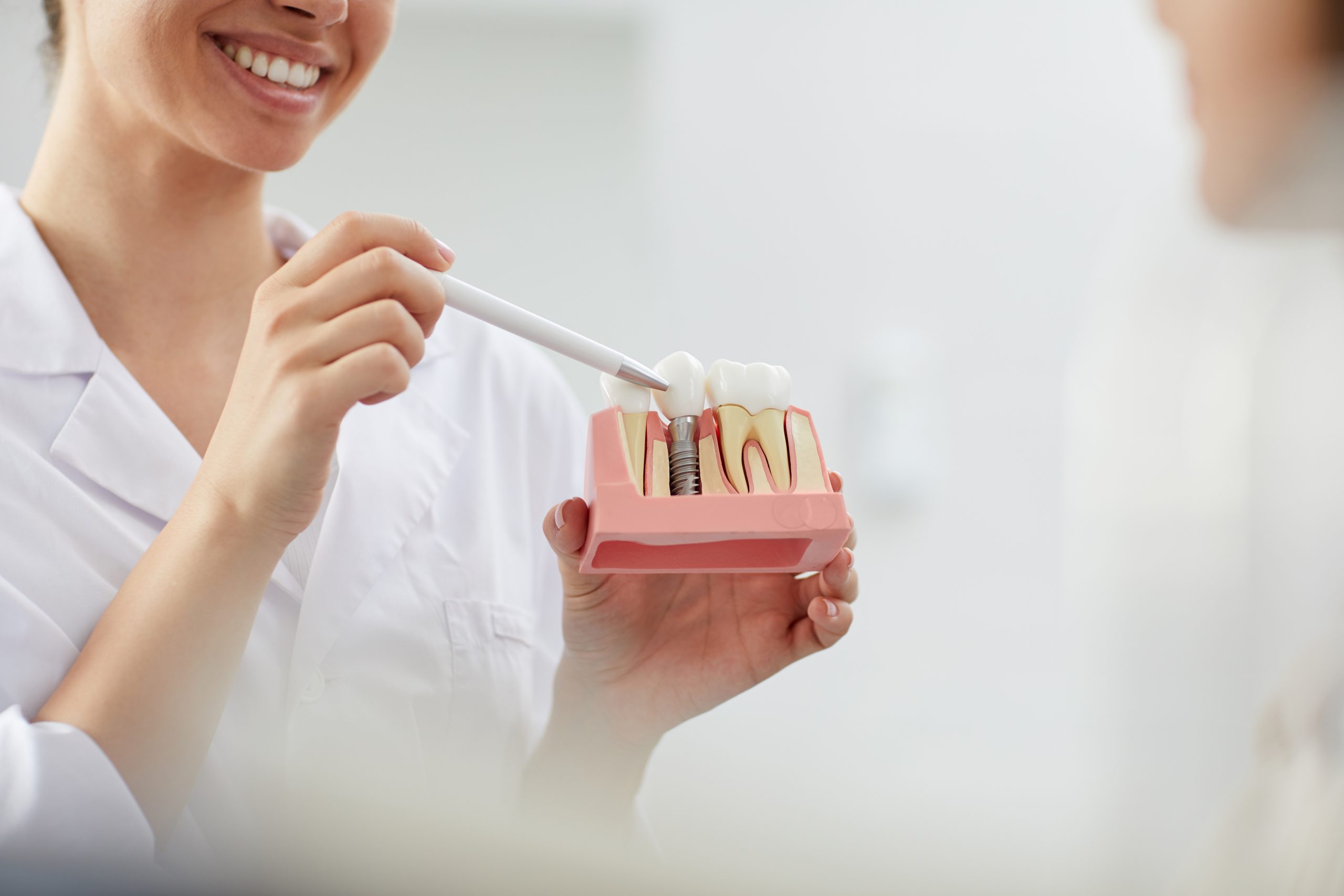
Whether you’ve decided to get dental implants or you’re still considering, learning about the process can help you know what to expect. It’s important to understand that this process doesn’t happen within one appointment or surgery. It truly is a process that can take months due to the amount of growth or healing needed between each step.
The dental implant process usually begins with your general dentist. If your general dentist determines you are a good candidate for dental implants, they will likely refer you to an oral surgeon, particularly in more complex cases. From there, your oral surgeon will take you through the following steps:
Damaged tooth removal: In order to prepare your mouth for dental implants, any damaged teeth must be removed.
Bone grafting: This is only a necessary step if your jawbone is too soft or isn’t thick enough to be able to support the implants, so not every patient will need it. Bone grafting helps create a more solid base for the implants and is typically completed before the implants are placed because the graft needs time to grow.
Dental implant placement and growth: At this point in the process, your surgeon will begin placing the dental implant itself, which is a threaded metal post that serves as a foundation for the missing tooth. This is another step that requires healing time in between to allow for the jawbone to grow and unite with the surface of the implant post. Since these are just the posts being placed into the jawbone, you’ll still have gaps where your teeth are missing. A type of partial, temporary denture can be placed for appearance if needed. You can remove this denture for cleaning and while you sleep.
Abutment placement: An additional but minor surgery may be needed after your gums have healed to place what is called an abutment. This is what the crown of your artificial teeth will eventually attach to. Since this surgery is minor, it is typically done with local anesthesia in an outpatient setting.
Artificial tooth placement: This is where your new smile comes to life! Once your gums have healed from the placement of the implants and abutments, your surgeon will make impressions of your mouth and remaining teeth. These impressions are then used to create the crowns of your new artificial teeth. You can choose from two different types of artificial teeth: fixed and removable. Fixed involves the teeth being permanently screwed onto the implant. Removable is similar to a removable denture or partial and snaps into place. These can be easily removed for cleaning.
Recovery:
After surgery, you may experience swelling, bruising, pain, or minor bleeding. These are all very common but can be treated with medications and antibiotics if need be. In the event that these symptoms worsen, contact your oral surgeon as soon as possible.
While this process can take months to complete, often some steps can be combined. This all depends on the treatment plan your oral surgeon and general dentist create for you. If you’re interested in dental implants, talk to your general dentist today about a referral!


